

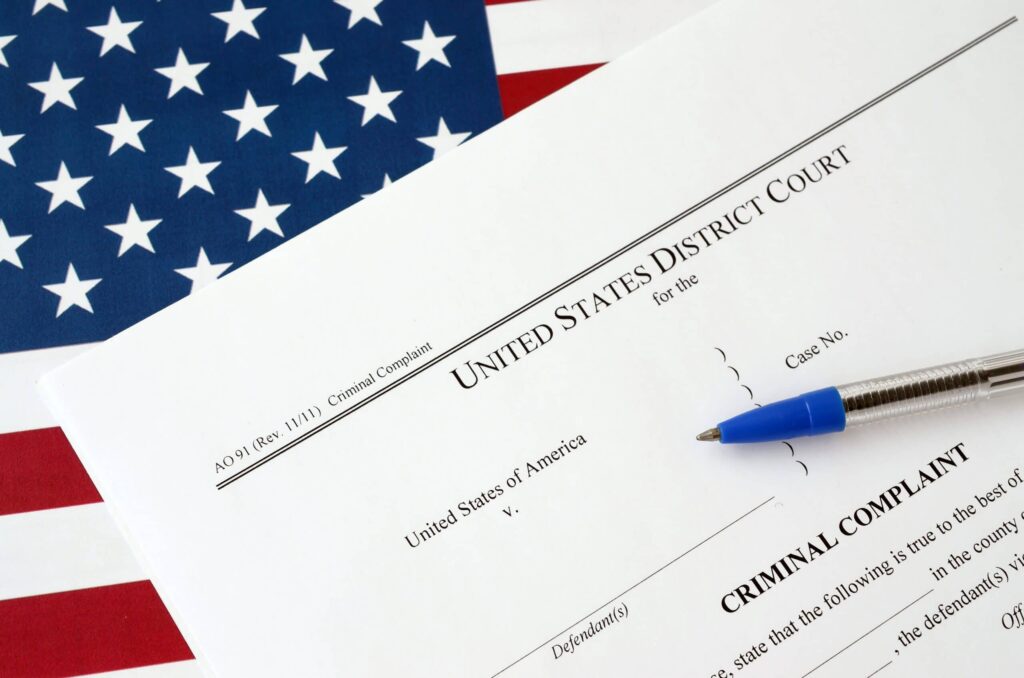
<span><p>Plea bargains are agreements between a defendant and a prosecutor where the defendant agrees to either plead guilty or no contest. In exchange, the defendant receives an agreement from the prosecutor to drop at least one charge, reduce a charge, or recommend to the judge a certain sentence the defense finds acceptable.</p>
<p>Plea bargains are increasingly common, given the crowded nature of prisons and the desire to move through criminal cases quickly. As much as 90% of convictions are the result of negotiated pleas.</p>
<p>Two types of plea bargaining exist: sentence and charge bargaining. Sentence bargaining is when the prosecutor agrees to recommend a lighter sentence for specific charges if the defendant then pleads guilty or no contest. Charge bargaining, on the other hand, is when prosecutors agree to drop some charges or reduce a charge if the defendant pleads guilty.</p>
<p>Plea bargaining can take place almost any time during the judicial process: shortly after a criminal arrest or as a jury returns to a courtroom to announce the verdict. In the case of a hung jury, rather than go through another trial, the prosecution and defense can negotiate a plea.</p>
<p>It should be noted that while a plea of no contest cannot be used against the defendant if the victim wishes to pursue damages in civil court later, pleading guilty can be used against the defendant. Pleading guilty or no contest to a judge-approved plea bargain means the defendant’s guilt is set and the conviction can show up on their criminal record. This conviction may potentially qualify to be expunged or sealed later on.</p>
<p><strong>If you are facing criminal charges, you need a fierce attorney who can seek out a plea bargain if necessary. <a href=”/Contact_Us.aspx”>Call on The Martinez Law Firm</a> for knowledgeable representation.</strong></p></span>
<span><p>For misdemeanor cases, the judge will typically sentence the defendant immediately after they plead guilty or no contest or are found guilty by trial. Felonies will usually mean the judge will not impose a sentence until several days later in a separate sentencing hearing.</p>
<p>When significant periods of incarceration are at stake, the probation department will have prepared a presentence report which they will argue over with the defense.</p>
<p>Judges usually consider oral statements made in court along with the probation officer’s written presentence report when they decide the sentence to hand down. As one might expect, the prosecution will attempt to obtain the maximum punishment during the sentencing for the defendant by noting any aggravating factors in their case and any history of criminal behavior. At the same time, the defense will argue for a lighter penalty. Defendants also may speak on their own behalf before the judge imposes a sentence.</p>
<h3>The Role of the Victim</h3>
<p>Victims also have a role to play in the sentencing—they can tell the judge how the crime has impacted their life, the pain they have suffered as a result, and any other reason why the judge should impose a harsh penalty. Victims have a right to make such statements before the judge.</p>
<p>Sentences are increasingly reflecting the impact the offense has on the victim and probation officers will often include a victim impact statement in the presentence report. Victims may also be eligible to recover restitution from the defendant or crime victim assistance funds that are paid by the county or state.</p>
<p><strong>If you are facing criminal charges you need a dedicated Houston criminal defense attorney to fight for your rights. <a href=”/Contact_Us.aspx”>Call The Martinez Law Firm</a> today for a <a href=”/Case_Evaluation.aspx”>free case evaluation</a>!</strong></p></span>
The Fifth Amendment is clear—
“no person shall be held to answer for a capital, or otherwise infamous crime…nor shall be compelled in any criminal case to be a witness against himself.”
Law enforcement may or may not inform you of your rights, which means it is up to you to be informed and understand beforehand what your rights are. One of those rights is remaining silent during an arrest or your Fifth Amendment.
Before interrogating an individual, police must provide them with their Miranda warnings and inform a person being arrested of their right to silence. This means law enforcement cannot use a suspect’s silence as evidence of guilt. If a suspect is not technically “in custody” police are obligated to let them know and that they are free to leave.
In order to keep the government from using your silence against you, you need to explicitly invoke your right to silence. Remaining silent during an arrest is your right as the 5th Amendment. You need to say something to the effect that you are invoking your privilege against self-incrimination.
If you have been arrested and wisely choose to exercise your right to silence until you have had the chance to speak with a Houston criminal defense attorney, you need to make this known to whoever is interrogating you. There is an exact formula to invoke your Miranda right to silence; just clearly and briefly state you do not wish to speak with law enforcement.
Speak with The Martinez Law Firm today if you or a loved one has been arrested!

Probable cause is the linchpin in many criminal cases.
Police are required to have a cause to arrest someone or obtain a warrant from a judge.
In establishing probable cause, law enforcement needs to show an objective situation that leads them to believe a suspect has committed a crime. In other words, there must be factual evidence, rather than a hunch, that a person is guilty of a crime.
Whether or not it exists is the judge’s purview who can examine the evidence and may disagree with law enforcement. Much is riding on the judge’s decision since the probable cause is such an abstract idea. A definition can depend on the person.
In essence, probable cause is the necessary facts or evidence which would bring a reasonable person to believe a suspect has committed a crime. A typical example of this includes the sight or smell of illegal substances in plain view or an admission of guilt. It can also be a Police Officer seeing teenagers take a keg inside a house. They now have reasoning to go and check up on what is going on. To be clear, a minor traffic infraction such as speeding, broken tail-lights, or expired registration is not.
Probable cause usually stems from four different sources:
- Observation of suspicious and potentially criminal behavior
- An officer’s experience in elements of illegal activity
- Individuals gave statements
- Information collected by witnesses and informants
- Circumstantial evidence which may imply guilty but which does not prove it
Have you been arrested? Call the firm today for your free case evaluation—(713) 489-9773!