

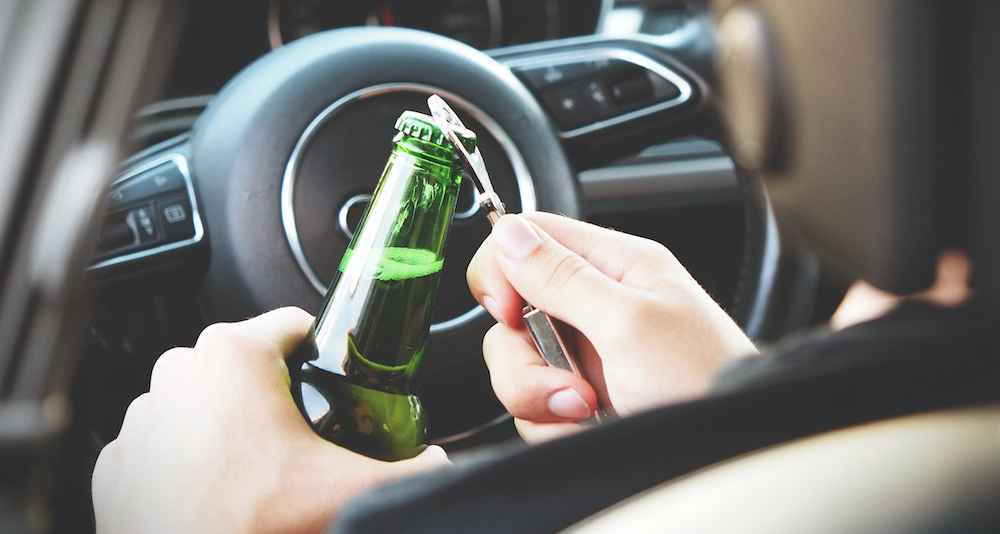
The current open container law in Texas was part of a push to make the laws around drinking and driving stricter. Moreover, they had to comply with the Federal Transportation Equity Act to ensure the state received funding.
For over a decade, there have been no significant changes to the open container law. However, many Texans remain confused about what the law covers. When you receive an open container ticket in Houston, TX, it’s not always easy to navigate the legal system.
With an experienced criminal defense attorney, you have someone to guide you through it. Schedule a free case evaluation today to learn more.
What Is an Open Container?
The term “open container” seems simple at first. However, the penal code is not so easy to interpret. The Texas Penal Code, Title 10, § 49.031 covers possession of an alcoholic beverage in a motor vehicle.
Per the penal code, a person commits this offense when they knowingly possess an open container in the passenger area of a vehicle on a public highway. This applies whether the vehicle is in transit, stopped, or parked.
For many Texas, the open container law leaves them with many questions.
- Can a passenger have an open container or is that against the law, too?
- Does an open container ticket go on your record?
- If the open container is in the trunk, is that illegal?
- Is it legal to drive with an open container of alcohol anywhere in the car?
- What are the consequences if I unintentionally violate this law as a driver or passenger?
At first, you might think you understand what qualifies as an open container, public highway, and passenger area. However, many Texas drivers don’t realize that these laws are stricter than many believe.
For instance, “open container” applies to a bottle, flask, or other container with any level of alcohol in it that is currently open or has been opened. Put simply, a previously opened bottle of whiskey counts under the open container law in Texas.
The only exclusions are containers that have never been opened or still have an intact factory seal.
What Counts as the “Passenger Area”?
The “passenger area” of this law is also a point of confusion. Essentially, any area where a container of alcohol is visible to the driver and within reach counts. However, the law specifically excludes open containers in the following areas.
- A locked glove compartment
- The trunk
- Areas behind the back row of seats in cars without trunks
“Public Highway”
Lastly, while the penal code refers to “public highways” specifically, this includes more than interstates and freeways. In reality, it applies to any container on a publicly maintained road.
Additionally, it includes areas immediately around any public road. So, if you park on a quiet back road, it’s possible to violate this law.
What Are the Penalties of the Open Container Law in Texas?
On its own, possession of an open container in a vehicle is a Class C misdemeanor. The base penalties include a fine of up to $500. It carries no mandatory jail time.
So long as you and your passengers violate no other laws, you receive a ticket and pay a fine. However, a violation of the open container law enhances the penalties of other crimes.
For instance, if you face DWI charges, an open container in your vehicle increases the fines and jail time you face. Oftentimes, we refer to this as an “open container enhancement.”
In such a case, this violation of the open container law is open to treatment as a Class B misdemeanor. This level of misdemeanor carries fines of up to $2,000 with potential jail time of up to 180 days.
Similarly, if you receive a charge for an open container while on DWI probation or with a suspended driver’s license, the potential penalties grow yet more severe. No matter the penalty, it’s important to understand how far-reaching the consequences can be.
While the state’s punishment is limited to a relatively minute fine, it goes on your record. Often, this has a negative impact on academic and career pursuits. For example, you might have a harder time attaining financial aid.
Additionally, many employers check criminal records. Moreover, when you need a professional license or security clearance, these records come under consideration. Lastly, car insurance companies often consider people with open container law convictions a higher risk. That leads to higher monthly premiums.
Fighting an Open Container Charge
Whether you face basic open container charges or an enhancement to your DWI, you have an opportunity to fight the charge. If an officer pulls you over, the law requires that they have reasonable suspicion and sufficient cause to search your vehicle.
If your charges stem from an illegal stop or an unlawful search, you need an experienced criminal defense attorney on your side. At The Martinez Law Firm, our DWI defense attorneys have a great deal of experience and expertise. Let us help you protect your future and fight for your rights.
Don’t hesitate to schedule a free consultation today.
If you have a charge for a DWI with a child passenger in the vehicle, you need to act fast. With a skilled DWI lawyer, you have an advocate to help you protect your future. Schedule a free consultation today.
Oftentimes, when we think about driving while intoxicated (DWI) charges, we picture someone walking a line in front of an officer. However, the reality is that DWI arrests are often far more complex.
During the arrest process, law enforcement officers examine a variety of factors. Ultimately, they want to determine what a prosecutor might charge the person with. In some cases, they charge someone for a DWI with a child passenger. This is far worse than your average DWI charge.
How Does a Minor’s Presence Change the Charge?
When someone drives drunk in a vehicle with a passenger under the age of 15, it constitutes driving while intoxicated with a child passenger. The penalties for this are much more severe than the basic DWI charge.
Let’s take a look at the potential penalties to see how this changes the penalties.
First-Time DWI
For a first-time DWI, you receive a class B misdemeanor. Generally, it results in one or more the following penalties.
- Fines up to $2,000
- A jail term of up to 180 days
- Both the fine and confinement
- DWI education and community service
As you can see, the charges are quite serious already. However, with a child in the vehicle, you face much worse.
First-Time DWI with a Child Passenger
Even when it’s your first offense, a DWI with a minor passenger is a felony in the state of Texas. As such, it results in the following penalties.
- Time in a state jail for anywhere from 180 days to 2 years
- Fines up to $10,000
It’s easy to see the difference. Moreover, the maximum sentence for a first-time DWI is the minimum sentence when you involve a child. Texas takes drunk driving charges seriously. The penalties are already severe before you involve anyone else.
Now, some people look at this information and think that they’ve never been drunk behind the wheel with a child in the car. However, it’s important to understand that your definition of “intoxicated” probably doesn’t match the state’s definition.
DWI Charges and “Intoxication”
Typically, DWI charges stem from two different causes. First, people face DWI charges when their BAC is above 0.08%. However, it’s also possible to face DWI charges when you do not “have the normal use of mental or physical faculties” due to the introduction of alcohol to your system.
Simply put, that means law enforcement officers have the power to arrest someone for a DWI even when their BAC falls under 0.08%.
With this broad definition of intoxication, Texas has the power to charge someone for a DWI with a child passenger even when they “feel fine.” If you ever have a couple of drinks and get into a car with a passenger under 15, understand your situation.
When the state convicts you of this crime, you face at least half a year of jail time – if not more. However, no one is guilty until the court reaches a decision. You need an advocate on your side to protect your rights and your future.
Experienced Representation from a Houston DWI Defense Attorney
When you face charges for drunk driving for a DWI with a child passenger, you have the right to legal representation. However, it is crucial that you work with an experienced attorney with expertise in DWI cases.
As a Houston criminal defense law firm, we offer legal representation backed by experience and expertise. To learn more about your legal options, schedule a free case evaluation with our team. Call now!

When the police charge you with a DWI in a rental car in Houston, it doesn’t matter whether you live here or not. For pleasure and for business, millions of people visit the state of Texas each year. While Texas has much to offer its visitors, our state also has very strict laws around driving while intoxicated (DWI).
Everyone needs to take drunk driving seriously because it endangers others on the road. Still, visitors to Houston often find themselves in a common scenario. Picture the following.
You travel and work all day. As your business concludes, you have dinner and drinks with some colleagues. You head back to your hotel in a rental car on roads you don’t know.
After a long day, you’re tired, and it’s difficult to navigate new roads in the dark. Moreover, perhaps you can’t figure out how to turn off the brights of this rental vehicle. Next thing you know, you see flashing lights behind you.
You roll to a stop, and an officer asks whether you had anything to drink. Too often, a small mistake turns into a DWI in a rental car during a business trip or on a vacation. However, it’s important to remember that you remain innocent until proven guilty.
You always have the right to defend yourself against drunk driving allegations. This is true even when your BAC shows above the legal limit. When you understand the consequences of a Texas DWI, you’ll see why it is essential to seek legal counsel as soon as possible.
What Are the Penalties of a DWI in Texas?
Generally speaking, a first-time DWI in Texas is a Class B misdemeanor. That means you face up to 72 hours in jail as well as fines and a license suspension. Moreover, you face a $3,000 administrative penalty for your first DWI in 36 months.
This mounts on top of any of the fines a judge imposes. When other factors aggravate the case, these penalties increase. These include intoxication assault, a BAC above .15%, a minor in the vehicle, and more.
Additionally, you potentially face other penalties, such as alcohol treatment or an order for an interlock device. This device fits your car’s starter, requiring you to blow into it to start your car. If it registers any alcohol, the car does not start.
DWI in a Rental Car: Impounded Rentals
After an arrest for a DWI in a rental car, the police have to do something with the vehicle. In some cases, they allow you to call someone to pick it up. If you had a legal, sober passenger in the car, the police might also allow them to drive it away.
However, that’s not always the case, and the police aren’t always that patient. In those cases, it’s a good idea to check FindMyTowedCar.com or call the tow line at 713-308-8580.
If this happens, call the rental company or ask the police to do so. They can pick up the vehicle from the impound lot. However, prepare yourself for fees and penalties. Moreover, it’s likely that you’ll need to arrange a pickup for any items you left in the car.
Lastly, you might want to see whether this company will allow you to continue renting vehicles from them in the future.
Texas Driver’s License
If you are a resident of Texas charged with a DWI in a rental car, the police confiscate your license. When they release you, they provide a paper that serves as a temporary license. This lasts for 40 days.
After that period, the state suspends your license for up to two years. This duration varies with any prior drunk driving convictions and whether you refused a BAC test.
To challenge this suspension, you have 15 days from your arrest to request an Administrative License Revocation hearing. Your temporary license lasts until your hearing date.
However, if you miss this deadline, your license remains suspended until your trial ends in a not guilty verdict.
DWI in a Rental Car: Your Out-of-State Record
If you live in another state, your Texas DWI in a rental car is likely to follow you home. In collaboration with 44 other states, Texas shares moving violations with other states. Per the Driver License Compact Commission, this includes DWI information and convictions.
Texas joined this compact in 1993. The purpose is to exchange information regarding traffic violations and license suspensions of non-residents. Moreover, it forwards them to their home state.
Due to this, residents of many states see their Texas DWI follow them home. Moreover, their home state may apply its own laws to your DWI in a rental car in Houston. Additionally, Texas reports whether you enter a plea of guilty or not guilty.
That means you face an array of penalties both in Texas and your home state. Unfortunately, this has the potential to result in staggering fines as well as jail time, points against your license, and more.
In addition to DWIs, Texas reports an array of charges. These include the following, among others.
- Failure to stop and provide information
- Intoxication manslaughter
- Failure to stop and render aid
- Felony in a motor vehicle
- Negligent homicide
- Intoxication assault
- Vehicular manslaughter
There are five states that are not part of the interstate compact. These are Wisconsin, Tennessee, Georgia, Michigan, and Massachusetts.
Texas does not have the power to suspend an out-of-state license. As such, it is up to your home state whether you face suspension. For instance, while Massassachusetts is not part of the compact, it often treats an out-of-state DWI as though it took place in the state.
You Have to Face Your Charges in Texas
Regardless of whether you reside in another state, you have to handle your charges for DWI in a rental car in Texas. You have to return for any hearings as well as the trial.
Failure to appear is always a bad idea. In this case, the Texas judge has the option to issue a default judgment against you. Often, that comes with a warrant for your arrest.
DWI in a Rental Car: Expert Representation
If you face charges of DWI in a rental car, the stakes are high. This is true regardless of whether you live in Texas. Potentially, you face jail time, a license suspension, fines, and more.
Moreover, you might face added penalties back home. To handle your charges in Texas, you need the representation of a skilled Houston DWI lawyer. With an experienced DWI defense attorney on your side, you have someone to mount an aggressive, strong defense.
Backed by experience and expertise in Texas DWI cases, the Martinez Law Firm is here to help you. With extensive experience in the courtroom, Herman Martinez offers unique insight into an array of criminal defense cases.
For a free consultation and review of your case, contact our firm today.