


When an individual is pulled over on suspicion of DWI, the police will most likely conduct a field sobriety test (FST) to see if they are in fact intoxicated. Unfortunately, they are not always accurate because a myriad of other factors can influence how people react to these types of tests.
Take a look at some of the common questions we receive regarding these types of tests:
- By law, do I have to submit to a field sobriety test if I am pulled over by the police?
Truthfully, the answer is no and it is often recommended that you do not take them. They are often unreliable, as there are a number of outside factors that can cause a person to fail. Health conditions, difficulty balancing, weight, age, and a variety of other things can all affect the results. It is important to note, however, that an officer will most likely make you take a breath or blood test if you do not submit to a routine test. - What are the most common versions of this test?
Horizontal Gaze Nystagmus, Walk-and-Turn test, and the One-Leg Stand test are the three that are considered “Standardized Field Sobriety Tests” according to the National Highway Traffic Safety Administration (NHTSA). - Is it possible to challenge your field sobriety test?
Yes, with the help of a qualified Houston DWI attorney, you can fight your field sobriety test. At The Martinez Law Firm, we know that being pulled over for a DWI can already be extremely stressful. We understand the various elements of these tests and we can combat how they were administered and establish if any misconduct occurred on the part of the administering officer.
No matter what the circumstances are surrounding your charges, our Houston DWI defense lawyers can strive to protect your rights both in and out of the courtroom. Call for a free evaluation of your case today and let us begin crafting the defense you deserve.

Refusing a Blood or Breath Test
In Texas, the “implied consent” law means that you consent to
a test to determine the amount of alcohol in your system. The law measures intoxication by the blood-alcohol content (BAC) percentage. A measurement of .08% and above is considered over the limit. Even if you do not “feel” drunk, an officer can arrest you for being considered legally drunk. However, note an officer must have reasonable suspicion that you were driving while intoxicated to pull you over.
When you submit to the test, you have the right to request to be tested
within at least two hours of your arrest. You can even choose with a doctor
or health care practitioner to take the test for you.
How Do The Courts Convict DWI?
Although DUI refusal can leave you culpable for penalties, this cannot
be used against you should your case be brought to trial. At the same
time, prosecutors may still have mounted enough evidence for a conviction. There may also be reasons why a chemical or blood test could not be obtained at the time of the arrest.
These are some examples:
- The judge ruled that the bodily fluids obtained were not admissible to trial.
- The equipment failed at the scene, and could not be used for a chemical test.
- Field sobriety tests determine that your actions demonstrated intoxication.
- The officer provided testimony that persuades the jury you were driving drunk.
- You refused to submit to either a chemical or blood test.
Do I Have the Right to Refuse the Test?
It does not help with the outcome of your case by refusing a blood or breath test.
These are the penalties for refusing to submit to the tests:
- 1st offense: 180-day license suspension
- 2nd offense: 2-year license suspension
- 3rd offense: 2-year license suspension
You may face numerous penalties, such as the standard
DWI penalties, which could include fines, DUI classes, probation, and even imprisonment. These will be in addition to license suspension or revocation. Therefore, it is imperative that if you are facing any DWI charge, even if you believe the evidence against you has no merit, you should fight.
We at The Martinez Law Firm are known for going above and beyond to help
our clients.
Call us today and let’s get started on building your defense!

Proving Intent is One of the Hardest Parts of a Prosecutor’s Job
Proving intent considers a person’s mental state and makes up the largest part of how criminal trials transpire. Prosecutors have the burden that an individual’s state of mind was fully aware of the actions about to take place, had planned those actions in advance, and knew what the consequences would be. This is called “criminal intent,” or mens rea.
How Mens Rea Works
To illustrate the difference, let us take, for example, involuntary manslaughter versus murder. What these two offenses have in common is that one person caused the death of another person. However, the very definition of involuntary manslaughter means that the individual acted recklessly or negligent, such as improperly handling a motor vehicle, and killed another.
Murder, on the other hand, is “the unlawful killing of another with
malice aforethought.” The keywords here are “malice aforethought,”
which means that the person committing the crime had every intention of
carrying out the killing before setting out to do the deed.
The Role of the Prosecutor
A prosecutor must prove that “beyond any reasonable doubt,” that
the accused person had planned a deliberate attempt to commit a crime.
Without proving intent, prosecutors will not be able to secure a criminal
a conviction for wrongdoing.
Most cases are not this cut and dry, though. There may be instances where
the accused person mistakenly believed something else, which caused him
or her to commit the crime. Here is one example: you are driving, and
you believe that the other driver is aware of your presence and motions
for you to make your maneuver. You mistakenly misinterpret the signal,
and the cars collide, killing the other driver. Because the circumstances
of the situation appeared accidental, you may have a defense available to you. In this case, proving intent can be very hard.
Bear in mind, however, that such defenses would not be valid in civil cases,
such as if the other party chooses to file a personal injury lawsuit to
recover the damages.
Accused? Call a Houston Criminal Defense Lawyer!
If you are facing criminal charges of any sort, know that there is hope.
There may be a valid defense to help preserve your reputation and prevent
you from accumulating a criminal record. Hiring a knowledgeable defense
team is the first step. A good defender knows how to seek out advice from
leading experts and makes thorough investigations—that is precisely
what we do at The Martinez Law Firm.
Start your case today and call to schedule your free consultation with us today!

Know Your Rights
One of the first things you need to do if you want to have any chance of
fighting a DWI in Houston, is you need to understand and exercise your legal rights. The law does not require you to submit to field sobriety tests, nor does it require you to answer an officer’s questions without having your attorney present.
Fight Evidence From Your Breath & Blood Test Results
While you are legally obligated to submit to a breath, blood, or another chemical testing, even what appears to be conclusive evidence gathered from these tests can be disproven with the help of a skilled DWI defense attorney. Having a skilled DWI attorney fighting a DWI in Houston for you is imperative if you have any chance of winning.
Schedule Your ALR Hearing & Have the Proper Defense
You only have 15 days to schedule your Administration License Revocation (ALR) hearing, so act quickly. An attorney from our firm can also help you fight to retain your driving privileges by providing representation at the hearing.
Let a Qualified Lawyer Thoroughly Investigate Your Charges
The sooner you are able to retain counsel, the sooner we will be able to
get started on strategizing for your defense. Above all, we take an individualized, client-driven approach to each of the cases we have taken on. Therefore, our clients are able to benefit from a defense that has been personalized to their individual situation.
Hire a Top-Rated Houston Defense Lawyer With a History of Success
If you have been arrested for suspicion of driving while intoxicated, we
advise you to waste no time in hiring a DWI attorney in Houston who you can trust to defend your rights. Furthermore, The Martinez Law Firm is a well-established criminal defense firm that has been providing legal
representation and counsel to those accused of DWI and other
criminal charges for nearly 20 years.
Attorney Martinez has received a 10.0 Superb Rating on Avvo and was named as the 2014 Avvo Clients’ Choice DUI & Criminal Defense Lawyer as well. He is well-versed on DWI laws and his track record of success clearly shows that he has the skills necessary to beat your DWI in Texas.
To get the help you need, contact a Houston attorney
from our firm now.

Expunging a DWI Can Help Your Future
After you are convicted of a DWI, it is essential to eventually seek an expungement. A DWI will go on your criminal record, which potential employers can access whenever you are interviewed for a new job. Many companies won’t hire individuals that have been arrested for a crime of this nature. An expunged DWI offense can typically still be used as proof of prior conviction, but they are not visible to prospective employers, educational institutions, and credit insurers, or other entities that conduct background checks.
This means that unless you are arrested again for another DUI, it will be as if you were never arrested in the first place. You will want to pursue an expungement with the help of an accomplished DWI lawyer. In order to receive this privilege, you will need to adhere to Chapter
55 of the Texas Criminal Code.
When Can a DWI Be Expunged?
According to the Texas Young Lawyers Association, individuals can have
their records expunged if they were:
- Arrested for a crime that was never charged; or
- If the criminal charge was ultimately dismissed.
Other Exceptions for Expungement
If a person was convicted
for a crime that was later acquitted by the trial court or the Criminal Court
of Appeals, or if it was a conviction for a failure to attend school,
that record can also be expunged. In addition, if the individual was convicted of a crime that was later pardoned by the Governor of Texas or the US President, then that record can be expunged. Some juvenile offenses are eligible for expungement, as well as some alcohol offenses involving minors.
If you want more information about expungement in your case, then
contact an attorney at the firm today to learn more!
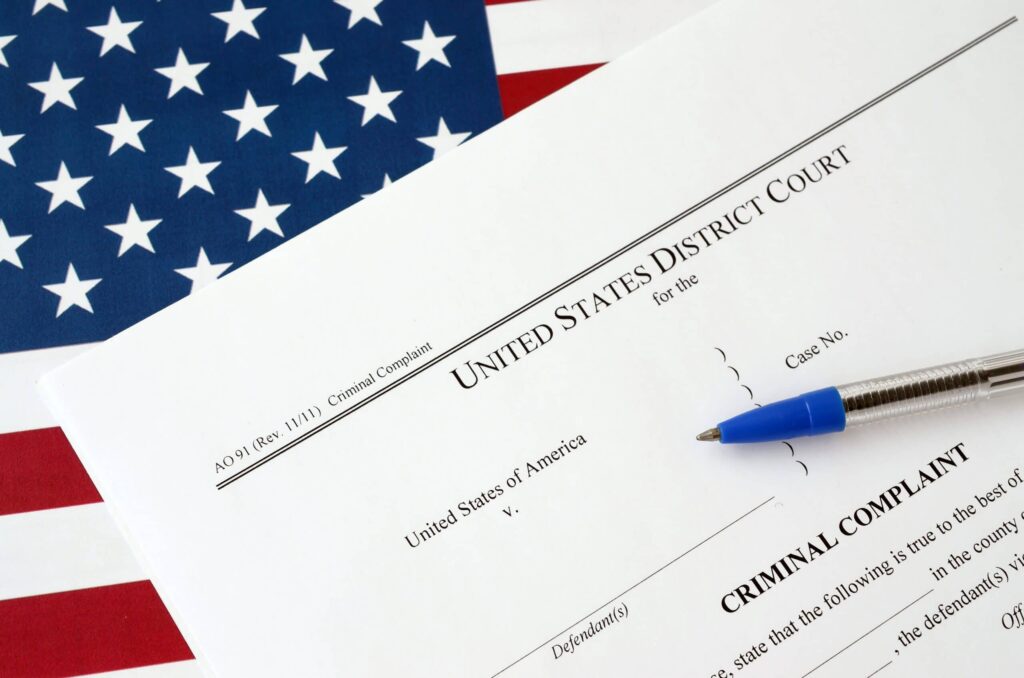
<span><p>Plea bargains are agreements between a defendant and a prosecutor where the defendant agrees to either plead guilty or no contest. In exchange, the defendant receives an agreement from the prosecutor to drop at least one charge, reduce a charge, or recommend to the judge a certain sentence the defense finds acceptable.</p>
<p>Plea bargains are increasingly common, given the crowded nature of prisons and the desire to move through criminal cases quickly. As much as 90% of convictions are the result of negotiated pleas.</p>
<p>Two types of plea bargaining exist: sentence and charge bargaining. Sentence bargaining is when the prosecutor agrees to recommend a lighter sentence for specific charges if the defendant then pleads guilty or no contest. Charge bargaining, on the other hand, is when prosecutors agree to drop some charges or reduce a charge if the defendant pleads guilty.</p>
<p>Plea bargaining can take place almost any time during the judicial process: shortly after a criminal arrest or as a jury returns to a courtroom to announce the verdict. In the case of a hung jury, rather than go through another trial, the prosecution and defense can negotiate a plea.</p>
<p>It should be noted that while a plea of no contest cannot be used against the defendant if the victim wishes to pursue damages in civil court later, pleading guilty can be used against the defendant. Pleading guilty or no contest to a judge-approved plea bargain means the defendant’s guilt is set and the conviction can show up on their criminal record. This conviction may potentially qualify to be expunged or sealed later on.</p>
<p><strong>If you are facing criminal charges, you need a fierce attorney who can seek out a plea bargain if necessary. <a href=”/Contact_Us.aspx”>Call on The Martinez Law Firm</a> for knowledgeable representation.</strong></p></span>

<span><p>For misdemeanor cases, the judge will typically sentence the defendant immediately after they plead guilty or no contest or are found guilty by trial. Felonies will usually mean the judge will not impose a sentence until several days later in a separate sentencing hearing.</p>
<p>When significant periods of incarceration are at stake, the probation department will have prepared a presentence report which they will argue over with the defense.</p>
<p>Judges usually consider oral statements made in court along with the probation officer’s written presentence report when they decide the sentence to hand down. As one might expect, the prosecution will attempt to obtain the maximum punishment during the sentencing for the defendant by noting any aggravating factors in their case and any history of criminal behavior. At the same time, the defense will argue for a lighter penalty. Defendants also may speak on their own behalf before the judge imposes a sentence.</p>
<h3>The Role of the Victim</h3>
<p>Victims also have a role to play in the sentencing—they can tell the judge how the crime has impacted their life, the pain they have suffered as a result, and any other reason why the judge should impose a harsh penalty. Victims have a right to make such statements before the judge.</p>
<p>Sentences are increasingly reflecting the impact the offense has on the victim and probation officers will often include a victim impact statement in the presentence report. Victims may also be eligible to recover restitution from the defendant or crime victim assistance funds that are paid by the county or state.</p>
<p><strong>If you are facing criminal charges you need a dedicated Houston criminal defense attorney to fight for your rights. <a href=”/Contact_Us.aspx”>Call The Martinez Law Firm</a> today for a <a href=”/Case_Evaluation.aspx”>free case evaluation</a>!</strong></p></span>
The Fifth Amendment is clear—
“no person shall be held to answer for a capital, or otherwise infamous crime…nor shall be compelled in any criminal case to be a witness against himself.”
Law enforcement may or may not inform you of your rights, which means it is up to you to be informed and understand beforehand what your rights are. One of those rights is remaining silent during an arrest or your Fifth Amendment.
Before interrogating an individual, police must provide them with their Miranda warnings and inform a person being arrested of their right to silence. This means law enforcement cannot use a suspect’s silence as evidence of guilt. If a suspect is not technically “in custody” police are obligated to let them know and that they are free to leave.
In order to keep the government from using your silence against you, you need to explicitly invoke your right to silence. Remaining silent during an arrest is your right as the 5th Amendment. You need to say something to the effect that you are invoking your privilege against self-incrimination.
If you have been arrested and wisely choose to exercise your right to silence until you have had the chance to speak with a Houston criminal defense attorney, you need to make this known to whoever is interrogating you. There is an exact formula to invoke your Miranda right to silence; just clearly and briefly state you do not wish to speak with law enforcement.
Speak with The Martinez Law Firm today if you or a loved one has been arrested!

Probable cause is the linchpin in many criminal cases.
Police are required to have a cause to arrest someone or obtain a warrant from a judge.
In establishing probable cause, law enforcement needs to show an objective situation that leads them to believe a suspect has committed a crime. In other words, there must be factual evidence, rather than a hunch, that a person is guilty of a crime.
Whether or not it exists is the judge’s purview who can examine the evidence and may disagree with law enforcement. Much is riding on the judge’s decision since the probable cause is such an abstract idea. A definition can depend on the person.
In essence, probable cause is the necessary facts or evidence which would bring a reasonable person to believe a suspect has committed a crime. A typical example of this includes the sight or smell of illegal substances in plain view or an admission of guilt. It can also be a Police Officer seeing teenagers take a keg inside a house. They now have reasoning to go and check up on what is going on. To be clear, a minor traffic infraction such as speeding, broken tail-lights, or expired registration is not.
Probable cause usually stems from four different sources:
- Observation of suspicious and potentially criminal behavior
- An officer’s experience in elements of illegal activity
- Individuals gave statements
- Information collected by witnesses and informants
- Circumstantial evidence which may imply guilty but which does not prove it
Have you been arrested? Call the firm today for your free case evaluation—(713) 489-9773!

A wet reckless is a plea bargain that can be made by someone charged with DWI/DUI. This is essentially a lesser charge acknowledging reckless driving with alcohol present. There are fewer penalties and punishments attached to a wet reckless conviction than a standard DWI.
However, Texas is one of the many states that does not allow the prosecution to offer this plea bargain. The law specifically prohibits the prosecution or judge from reducing a DWI charge to a non-DWI offense, which is what a wet reckless is. That being said, you shouldn’t give up hope if you have been charged with DWI in Houston.
Can my DWI Charges Still be Reduced?
Even though Texas prohibits you from pleading your DWI charge down to a wet reckless, your attorney may still be able to make a deal with prosecutors. How might this happen? While Texas does not allow certain charge bargaining in DWI cases, they do allow sentence bargaining.
In a DWI case, you could be facing the following penalties:
- Thousands of dollars in fines
- License suspension
- Jail or prison time
When the representing lawyer utilizes sentence bargaining, they may be able to secure lesser penalties. However, you are still charged with DWI. For example, you could get the fines or jail time waived in place of agreeing to community service. Additionally, you could limit your license suspension by working out a deal to have an ignition interlock device installed instead, allowing you to continue driving.
If you were charged with drunk driving, you don’t have to fight your charges alone. Even if a conviction seems inevitable, our Houston DWI attorney can work to get your penalties reduced, and your record shielded as much as possible. With over 15 years of experience and time spent as a former chief prosecutor, Attorney Martinez is highly knowledgeable in understanding how to defend against DWI charges aggressively.
Call a 10.0 Superb rated lawyer who has been rated as a Top DUI Lawyer by H Texas Magazine and Avvo. We are available for a FREE initial consultation online or when you call (713) 489-9773!