

Understanding Your Constitutional Right Against Self-Incrimination

“Plead the fifth” is a phrase many know from TV, but its real-world application is a critical legal strategy. It refers to invoking your Fifth Amendment right to refuse to answer questions that could incriminate you. Here’s a quick overview:
- Your Right: The Constitution says you cannot be compelled to testify against yourself in a criminal case.
- When to Use It: This right applies during police questioning, court testimony, or any legal setting where your answers could be used against you.
- Key Point: Invoking this right is not an admission of guilt. It’s a protection for everyone, and juries in criminal cases are forbidden from holding your silence against you.
The Fifth Amendment’s Self-Incrimination Clause states that no person “shall be compelled in any criminal case to be a witness against himself.” This principle was born from the abuses of 17th-century English inquisitorial courts, which forced confessions. The founders included it to ensure no one is bound to accuse themselves.
Why Plead the 5th?
Many wonder why an innocent person would plead the Fifth. The Supreme Court has affirmed this right protects the innocent and guilty alike. You might use it to avoid perjury traps, prevent misremembered facts from being twisted against you, or simply because the Constitution guarantees you don’t have to help the prosecution build its case.
However, exercising this right has become more complex. Recent court decisions mean that in some situations, you must explicitly state you are invoking your rights—silence isn’t enough.
I’m Herman Martinez, founder of The Martinez Law Firm in Houston. With over 25 years of experience as a former Chief Prosecutor and now a criminal defense attorney, I’ve seen how crucial it is to know when and how to plead the Fifth. For anyone facing criminal charges in the Houston area, understanding this right is a cornerstone of a strong defense.
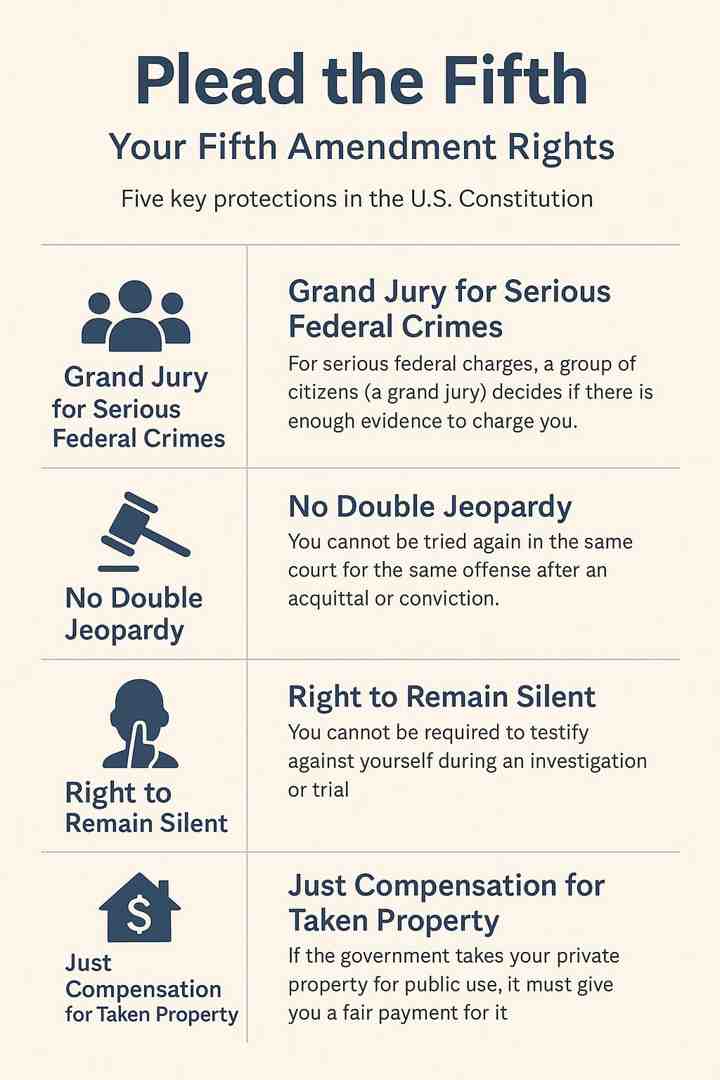
Understanding the Fifth Amendment and Your Right to Remain Silent

The Fifth Amendment is a constitutional shield against government overreach. For anyone in Houston facing the justice system, understanding its protections is vital.
What is the Fifth Amendment?
The Fifth Amendment provides five distinct protections. While most people associate it with the right to remain silent, it also includes:
- The Grand Jury Clause: Requires a grand jury indictment for serious federal crimes, preventing baseless charges. Texas has its own grand jury procedures.
- Double Jeopardy Protection: Prevents the government from trying you twice for the same crime after an acquittal or conviction.
- The Self-Incrimination Clause: This is the basis for the right to plead the fifth. It ensures you cannot be forced to provide testimony against yourself in a criminal case.
- Due Process: Guarantees the government must follow fair legal procedures before depriving anyone of life, liberty, or property.
- The Takings Clause: Requires the government to pay “just compensation” for private property taken for public use.
You can explore the complete text through the Fifth Amendment explained by Cornell Law.
What Does It Mean to ‘Plead the Fifth’?
To plead the fifth is to invoke your constitutional right to refuse to answer questions that could incriminate you. It is not an admission of guilt but a fundamental protection for all. The right applies to any testimonial evidence—communicative statements that could provide a “link in the chain” of evidence needed for prosecution.
This right can be used in various settings in Houston and Harris County:
- Criminal Proceedings: Defendants and witnesses can invoke the right on the stand.
- Police Questioning: You have the right to remain silent, especially during a custodial interrogation (the basis for Miranda rights).
- Civil Cases: You can plead the fifth in a civil suit if your testimony could lead to criminal charges. However, unlike in criminal trials, a civil jury may be allowed to draw a negative inference from your silence.
- Governmental Hearings: Witnesses in congressional hearings and other proceedings can also invoke this right.
Crucially, invoking this right is not an admission of guilt. The Supreme Court has made it clear the privilege protects the innocent just as much as the guilty. At The Martinez Law Firm, we help Houston clients make the strategic decision about when and how to use their Fifth Amendment rights, a choice that requires deep knowledge of constitutional law and Texas criminal courts.
The ‘Why’ and ‘How’ of Invoking Your Rights

Deciding to plead the fifth can be daunting, as many people fear it makes them look guilty. However, understanding the practical reasons for this right shows why it’s a vital protection.
Historical Roots of the Self-Incrimination Clause
The right to remain silent was born from the brutal tactics of 17th-century English courts like the Star Chamber, which forced people to answer questions without even knowing the accusations against them. This led to the principle of nemo tenetur seipsum accusare—no one is bound to accuse himself. The Founding Fathers included this protection in the Bill of Rights to prevent such government overreach. You can learn more from the historical context of the Fifth Amendment.
Why an Innocent Person Might Plead the Fifth
Many of our Houston clients are surprised to learn that innocent people have excellent reasons to plead the fifth. Answering questions, even truthfully, can be risky.
- Avoiding Perjury Traps: Under pressure, it’s easy to misremember facts or give confusing answers. Prosecutors can use any inconsistency to suggest you’re lying.
- Preventing a “Link in the Chain”: In Ohio v. Reiner, the Supreme Court affirmed that the right protects the innocent, as even truthful testimony could provide a “link in the chain” of evidence against them. Prosecutors don’t need a full confession; they just need details that help build their case.
- Protecting Others: You might invoke the right to avoid implicating friends or family.
The bottom line is that pleading the fifth is a right for the innocent and guilty alike. It’s a protection against a system that can sometimes ensnare innocent people.
Pleading the Fifth vs. Pre-Arrest Silence
Knowing how and when to invoke your right is critical. The law treats silence differently depending on the context.
In custodial interrogation (when you’re under arrest), Miranda v. Arizona requires police to inform you of your right to remain silent and right to an attorney.
However, in non-custodial settings (when you’re not under arrest), the rules are different. The 2013 case Salinas v. Texas changed the landscape. A man voluntarily answered police questions but fell silent on a key question. Because he never explicitly invoked his Fifth Amendment right, the Supreme Court allowed his silence to be used as evidence of guilt.
This ruling has major implications in Houston. If you are speaking to police and are not in custody, simply staying quiet is not enough. You must clearly state, “I am invoking my right to remain silent and would like to speak with an attorney.” This removes all ambiguity. You can read more in our article about how the Supreme Court Declares Silence Can Be Held Against You.
Legal Implications When You Plead the Fifth in Texas

In a Houston courtroom, the consequences of invoking your right to plead the fifth differ dramatically between criminal and civil cases.
Can a Jury Infer Guilt from Pleading the Fifth?
The answer depends on the type of case.
- In criminal cases, no. The Supreme Court’s ruling in Griffin v. California established a clear rule: prosecutors cannot comment on a defendant’s refusal to testify, and juries are instructed not to draw any “adverse inference” from it. The prosecution must prove its case without using your silence against you. This protection is absolute in all Texas criminal courts.
- In civil cases, yes. While you can still plead the fifth in a civil lawsuit to avoid criminal self-incrimination, the jury is often allowed to draw a negative conclusion from your silence. They may assume your testimony would have been damaging.
This creates a dilemma if you’re facing both civil and criminal liability. Testifying in the civil case could create evidence for the criminal case, but pleading the fifth could cause you to lose the civil suit. This complex situation requires strategic advice from a Houston attorney.
How the Fifth Amendment Applies in Houston Courts
Your Fifth Amendment rights are just as strong in Texas state courts as they are in federal court. Through the incorporation doctrine of the Fourteenth Amendment, fundamental rights apply to state governments. The Supreme Court confirmed this in Malloy v. Hogan (1964), making the privilege against self-incrimination fully applicable in state proceedings.
This means your right to plead the fifth is the same whether you are in a Harris County district court or a federal court in Houston. The Texas Constitution also provides its own similar protections. An experienced Houston attorney understands how these rights are applied in local courts, which is crucial for an effective defense.
Limitations and the Role of a Criminal Defense Attorney
While the right to plead the fifth is powerful, it is not absolute. Understanding its limitations is key to using it effectively.
Are There Exceptions to the Right to Plead the Fifth?
The Fifth Amendment’s protection has several important exceptions:
- Corporations and Business Records: The privilege is personal and does not apply to collective entities like corporations or partnerships. A custodian of records cannot refuse to produce documents, even if they are incriminating. This is highly relevant for business-related investigations in Houston.
- Non-Testimonial Evidence: The right only protects you from being forced to testify or communicate. It does not protect physical evidence. As established in Schmerber v. California, police can compel you to provide blood or DNA samples, fingerprints, or stand in a lineup.
- Immunity Grants: If a prosecutor grants you immunity, you can no longer claim the right against self-incrimination for that testimony. Use immunity protects your testimony from being used against you, while broader transactional immunity protects you from prosecution for the related offense. Refusing to testify after a grant of immunity can lead to contempt of court charges.
- Waiving the Privilege: If you voluntarily start answering questions on a topic, you may waive your right to remain silent on related follow-up questions. This is known as “opening the door” and is a common trap.
Why You Need a Houston Attorney When Considering to Plead the Fifth
Deciding whether to plead the fifth is a complex legal decision with serious consequences. As a former prosecutor now defending clients in Houston, I know how critical the right legal guidance is. An experienced attorney is essential for several reasons:
- Assessing Risks and Benefits: An attorney can analyze whether speaking or remaining silent is the best strategy, especially when facing both criminal and civil liability. Our experience as a former prosecutor gives us unique insight into how the other side thinks.
- Ensuring Proper Invocation: After Salinas v. Texas, simply staying quiet may not be enough. An attorney ensures you use the correct language, such as, “I am invoking my right to remain silent under the Fifth Amendment, and I would like to speak with an attorney.”
- Avoiding Accidental Waiver: It is easy to inadvertently waive your rights by answering seemingly harmless questions. We guide you to maintain that protective shield.
- Negotiating Immunity: If prosecutors offer immunity, an attorney can negotiate for the best terms, such as transactional immunity over use immunity, to fully protect you.
This is about protecting your future. Whether you face drug offenses or other charges in Houston, using your Fifth Amendment rights effectively is a critical part of your defense. We offer a free consultation to help you make informed decisions.
For more guidance, read our articles on When to Hire a Criminal Defense Attorney and the Role of a Criminal Defense Attorney.
Key Takeaways on Pleading the Fifth
The phrase “I plead the fifth” represents a fundamental constitutional right that shields citizens from government overreach and coerced confessions. This protection is vital whether you are in a Houston police station or a Harris County courtroom.
Crucially, invoking your Fifth Amendment right is not an admission of guilt. It is a right for the innocent and guilty alike, ensuring the burden of proof remains on the prosecution. It acknowledges that anyone can be trapped by confusing questions or misremembered details.
However, knowing when and how to invoke this right is complex. The rules differ for criminal and civil cases, and after Salinas v. Texas, you must often explicitly state your intention to remain silent. With exceptions for non-testimonial evidence, corporate records, and immunity grants, navigating this right is treacherous.
That’s where experienced legal counsel is invaluable. At The Martinez Law Firm, our 25+ years of experience, first as prosecutors and now as defense attorneys, gives us the insight to protect our clients’ rights in the Houston criminal justice system. The decision to plead the fifth is too important to make alone.
If you are under investigation or facing criminal charges in Houston or Harris County, do not steer these waters without a skilled advocate. Contact a Houston criminal defense lawyer at The Martinez Law Firm today for a confidential consultation. Your rights and your future deserve a fierce defender.
Understanding Domestic Violence and Finding Help in Houston

If you’re searching for Houston domestic violence help, you’re not alone. Many resources exist to provide immediate safety and support. Here are some key contacts for urgent assistance:
- Houston Area Women’s Center (HAWC) 24/7 Hotline: 713-528-2121
- National Domestic Violence Hotline: 1-800-799-SAFE (7233)
- Aid to Victims of Domestic Abuse (AVDA): 713-224-9911 (for legal aid and counseling)
- Bay Area Turning Point (BATP) 24/7 Hotline: 281-286-2525
Domestic violence is a serious issue affecting countless lives. It’s not just physical abuse; it can include emotional, psychological, financial, and sexual abuse. These actions leave lasting scars, impacting victims, their children, and entire families.
Sadly, the statistics are stark: one in three women and one in ten men will experience domestic or sexual violence in their lifetime. In Houston, there are currently seven domestic violence shelters and programs, with four offering hotlines and emergency shelter.
This guide aims to shed light on these hidden struggles and connect you with the lifelines available. You deserve safety and peace.
As a criminal defense attorney and former prosecutor, I’ve seen the devastating effects of domestic violence and the urgent need for effective Houston domestic violence help. With more than 25 years in the courtroom, I offer a practical, informed perspective on navigating the justice system for those impacted.

Recognizing the Warning Signs of Domestic Violence
When we talk about domestic violence, we’re really talking about a pattern of harmful behaviors that one person uses to gain and keep power and control over another in an intimate relationship. It’s not always obvious, and it’s certainly not always physical.
Abuse can show up in many different forms, slowly chipping away at someone’s spirit and safety. Learning to spot these signs, whether for yourself or someone you care about, is the very first step toward finding safety and getting the Houston domestic violence help that’s available.
What are the common signs of an abusive relationship?
Abuse patterns rarely start with a bang. Often, they begin subtly and then escalate over time, becoming more frequent and severe. Here are some common warning signs that might indicate an abusive relationship:
Physical & Emotional Abuse
One of the most recognized forms is physical abuse. This can mean obvious acts like hitting, slapping, pushing, or kicking. But it can also include less visible harm, like denying someone medical care, preventing them from sleeping, or trapping them in a room.
Then there’s emotional and psychological abuse, which quietly eats away at a person’s self-worth and mental well-being. This might involve gaslighting, where an abuser makes you doubt your own sanity or memory, making you feel crazy. You might experience constant criticism and put-downs, where your achievements, appearance, or intelligence are regularly belittled.
Verbal Abuse
Threats are also a big red flag – threatening to harm you, your loved ones, pets, or even themselves. Abusers often resort to blaming the victim, shifting all responsibility for their bad behavior onto you. And sometimes, it’s just pure intimidation, using harsh looks, gestures, or shouting to instill fear.
Financial Abuse
Financial abuse is another powerful way to control someone, leaving them completely dependent. This can look like controlling all the money, denying you access to funds, or forcing you to account for every single penny you spend. It might also involve preventing you from working or going to school, or even running up debt in your name without your knowledge.
Social Abuse
Abusers frequently try to create isolation, cutting victims off from their support network. This often starts with extreme jealousy and possessiveness. They might constantly monitor your communication – checking your phone, texts, or emails – or outright prevent you from seeing friends, family, or even going to work. This leaves you feeling alone and more reliant on them.
In our modern world, abuse has extended into the digital space, known as digital abuse. This includes harassing you endlessly via text, email, or social media. It can also involve tracking your location without your consent or, terrifyingly, sharing intimate photos or videos of you without your permission.
Finally, there’s stalking, which is persistent and unwanted attention that makes you fear for your safety. This could mean following you, showing up unannounced at your home or workplace, or sending unwanted gifts. Abusers also often display unpredictability, having extreme mood swings that leave you constantly “walking on eggshells,” unsure of what will trigger their next outburst.
Recognizing these patterns is incredibly important. If you suspect someone you know is experiencing domestic violence, offering a supportive ear and connecting them to resources can be life-saving. For more information on the legal aspects of physical harm, you can read our article about More info about Assault.
Immediate Crisis? Houston’s 24/7 Emergency Hotlines
When you’re facing an immediate crisis, knowing exactly who to call can truly change everything. Hotlines are more than just phone numbers; they’re lifelines. They offer a safe space for confidential support, help you make a safety plan, and quickly connect you with vital resources. If you are in immediate danger, your first call should always be to 911.

These hotlines are specifically set up to be available for you 24/7. This means help is always just a call away, day or night, and often with support in multiple languages. You don’t have to face this alone.
National and State-Wide Hotlines
Beyond our local Houston resources, there are fantastic national and state-level hotlines ready to offer crucial support, no matter where you are in Texas.
First, there’s the National Domestic Violence Hotline. This incredible resource is the only 24/7 center in the entire nation that can connect you directly with service providers and shelters. You can reach them by calling 1-800-799-SAFE (7233), or by visiting their website at The National Domestic Violence Hotline. They even offer convenient text and chat options if talking on the phone isn’t safe or comfortable for you.
For support specifically within Texas, the Texas Council on Family Violence is a vital organization working to end family violence across the state. While they don’t operate a direct hotline for victims, they are a powerful advocate and can guide you to many local resources. You can also text BEGIN to 88788 for Texas-specific support.
If you’ve experienced sexual assault, the Rape, Abuse, & Incest National Network (RAINN) National Hotline is there for you at 1-800-656-HOPE (4673), or you can find more information at www.rainn.org.
And if you ever suspect a child is being abused, please reach out to the Childhelp National Child Abuse Hotline at 1-800-422-4453 or visit www.childhelp.org. Their compassionate crisis counselors are available 24/7 and can assist in over 170 languages. Similarly, for reporting child or adult abuse in Texas, you can call the Child & Adult Protective Services Hotline (Texas) at 1-800-252-5400 or visit www.dfps.state.tx.us/contact_us.
Key Houston-Area Emergency Hotlines
When you need specific Houston domestic violence help, our local community steps up with dedicated hotlines right here in your backyard:
- The Houston Area Women’s Center (HAWC) is a cornerstone of support. Their domestic violence hotline is 713-528-2121. They also run a sexual assault hotline at 713-528-7273 and have a TTY line at 346-295-8994. HAWC is renowned for its free, confidential, 24/7 support services.
- The Bridge Over Troubled Waters offers a 24-hour hotline at 713-473-2801. They provide crucial services like residential shelter and counseling to those in need.
- For those in the Bay Area, Bay Area Turning Point (BATP) has a 24/7 hotline at 281-286-2525. They are a safe haven, offering emergency shelter for battered women and children, along with confidential support. You can explore more about their services at www.bayareaturningpoint.org.
- Serving Fort Bend County, the Fort Bend Women’s Center (FBWC) hotline is 281-342-HELP (4357). Their mission is to empower survivors to achieve safety and build a path towards self-sufficiency.
- For residents of Montgomery County, the Montgomery County Women’s Center (MCWC) provides a 24-hour hotline at 936-441-7273. They offer immediate crisis intervention, counseling, safe shelter, and important legal advocacy.
- Finally, Family Time Crisis & Counseling Center, located in Humble, runs a safe shelter hotline at 281-446-2615. They provide counseling and help connect shelter residents with further resources.
These hotlines are truly your very first point of contact for getting immediate safety planning, emotional support, and connecting with a wide array of services designed just for you.
Finding Safe Harbor: A Guide to Houston Domestic Violence Help
Once the immediate crisis has passed, a deeper journey begins: one of healing, rebuilding, and finding lasting safety. Thankfully, Houston is home to a robust network of organizations dedicated to offering comprehensive, free, and confidential support. These incredible resources are here to empower survivors like you, helping you reclaim your life and find peace.
Think of it as finding your “safe harbor” – a place where you can access the vital services you need. This often includes emergency shelter, compassionate counseling, and crucial legal assistance, all designed with survivor empowerment at their heart. Every step of the way, these organizations provide invaluable Houston domestic violence help.
Emergency Shelters and Transitional Housing
When you’re fleeing a dangerous situation, finding a safe place to rest your head is paramount. Houston’s emergency shelters are more than just a roof over your head; they are true safe havens. They offer immediate relief, allowing you to breathe, think, and start planning your next steps in a secure environment. Many also provide transitional housing, helping you bridge the gap to a more permanent, independent living situation.
Organizations like the Houston Area Women’s Center (HAWC) offer both emergency shelter and transitional housing, complete with counseling and other vital support services. The Bridge Over Troubled Waters provides a nurturing, family-like residential shelter for women and children, focusing on counseling and education to help them move forward. You can also find emergency shelter for battered women and children at Bay Area Turning Point. Their website, www.bayareaturningpoint.org, offers more information on their crucial services.
For families, Family Time Crisis & Counseling Center offers safe shelter for battered women and children (including boys up to age 14), providing counseling and referrals. Even organizations like Salvation Army Sally’s House, Star of Hope Mission, Mission of Yahweh, and Catholic Charities, while not exclusively domestic violence shelters, often serve as temporary refuges for those escaping abusive situations, offering general homeless and family shelter services. These places provide the breathing room and safety needed to begin the healing process.
Counseling and Emotional Support Services
Healing from the trauma of domestic violence is a unique and often long journey, but you don’t have to walk it alone. Emotional support and professional guidance are key to processing the past and building a stronger future. Many wonderful organizations offer counseling and therapeutic services for survivors, and often for their children too.
AVDA (Aid to Victims of Domestic Abuse), for instance, provides free trauma counseling for adults and children (ages 12 and up). Their mission is all about ending family violence through advocacy and community support. You can reach them at 713-224-9911. Similarly, FamilyTime Crisis & Counseling Center offers free counseling to victims of family violence in Texas, complementing their shelter services. You can also find support at places like Innovative Alternatives and Center for Counseling in Houston.
The Houston Area Women’s Center (HAWC) includes counseling for domestic violence survivors as a core part of their comprehensive services. And remember, many of the shelters we mentioned, such as The Bridge Over Troubled Waters, Bay Area Turning Point, and Montgomery County Women’s Center, integrate counseling directly into their programs. These services are vital for processing trauma, developing healthy coping mechanisms, and rebuilding self-esteem, setting you firmly on the path toward independence and well-being.
Legal Houston domestic violence help: Navigating Your Rights
Navigating the legal system can feel overwhelming, especially when you’re healing from trauma. But having the right legal assistance is absolutely crucial for securing your safety and seeking justice. Thankfully, many organizations offer free or low-cost legal aid, providing essential Houston domestic violence help.
AVDA (Aid to Victims of Domestic Abuse) is a fantastic resource, offering free legal representation and other services to domestic violence victims in Harris and Fort Bend counties. They can help with protective orders, divorce proceedings, child support, and custody, regardless of your citizenship status.
For those with low incomes, Houston Volunteer Lawyers provides pro bono civil legal services, including family law, in Harris County. You can contact them at 713-228-0735 or visit www.makejusticehappen.org. Another great option is Lone Star Legal Aid Foundation, which offers civil legal services to low-income individuals and families, including assistance with domestic violence cases. Their Houston office is at 713-652-0077, or you can visit www.lonestarlegal.org.
Texas Advocacy Project (TAP) offers free legal and social services specifically for survivors of intimate partner violence, sexual assault, stalking, human trafficking, and child abuse across Texas. They’re unique because they have no restrictions or waitlists – just call 800-374-HOPE or visit www.texasadvocacyproject.org. And for general legal information, referrals, and even emotional support via email, WomensLaw.org is a valuable online resource at https://www.womenslaw.org/.
Understanding your legal rights, seeking protective orders, having legal representation in court, or getting help with divorce and child custody can be powerful steps toward securing your safety and building a new, independent life. For a deeper dive into the legal implications and how we can help, we encourage you to visit our page on Houston Domestic Violence legal information.
Specialized Resources for Every Survivor in Houston
Domestic violence doesn’t discriminate, and neither should the support available to survivors. In Houston, we’re incredibly fortunate to have a rich mix of organizations dedicated to providing Houston domestic violence help that’s truly inclusive.
These groups understand that every survivor’s journey is unique, and they work hard to offer support that feels right for diverse communities. It’s essential that every survivor feels seen, heard, and understood, no matter their background.

Support for LGBTQ+ Individuals
For our LGBTQ+ friends and neighbors, experiencing domestic violence can come with an added layer of challenges. Issues like homophobia, transphobia, and societal stigma can make it even harder to reach out for help. Thankfully, Houston offers wonderful resources that provide affirming and inclusive support.
The Montrose Center is a shining example, offering rental living spaces, resources, and programs specifically for local lesbian, gay, bisexual, and transgender people and their loved ones. You can reach their main line at 713-529-0037, and they even have an LGBT Switchboard 24-Hour Hotline (supporting survivors of sexual assault) at 713-529-3211. Another powerful ally is AVP (Anti-Violence Project), which works to empower LGBTQ+ and HIV-affected communities. They help end all forms of violence and provide crucial support to survivors through counseling and advocacy. You can learn more about their vital work at https://avp.org/get-help/. These organizations truly understand the specific dynamics of abuse within LGBTQ+ relationships and offer safe, welcoming spaces.
Culturally-Specific Houston domestic violence help
We know that language and cultural differences can sometimes be barriers when seeking help. That’s why Houston is home to incredible organizations that offer culturally sensitive and language-specific Houston domestic violence help. They ensure that survivors receive support that respects their heritage and is delivered in a way that feels comfortable and familiar.
For instance, DAYA focuses specifically on the South Asian community in Houston, providing legal, intervention, and financial assistance to victims of domestic violence. You can contact them at 713-981-7645 or visit www.dayahouston.org. Similarly, Asians Against Domestic Abuse (AADA) offers culturally sensitive and language-specific services to victims from the broader Asian community in Houston.
For our Hispanic community, Community Family Centers provides services in Spanish, ensuring that language is never a hurdle to finding help. Their number is 713-923-2316, and their website is www.communityfamilycenters.org. While not exclusive to Houston, WomanKind also offers a highly trained helpline with advocates who speak English, Spanish, and over 18 Asian languages and dialects, including Chinese, Korean, Japanese, and Tagalog. This can be an invaluable resource for Houston’s incredibly diverse population.
Resources for Immigrants and Undocumented Survivors
Immigrant survivors often face unique and daunting challenges, such as fear of deportation, language barriers, and simply not knowing their rights. Thankfully, several Houston organizations offer vital support to these individuals, often regardless of their citizenship status. They understand that safety should be accessible to everyone.
Catholic Charities offers an excellent Immigrant Legal Assistance program in Houston, reachable at 713-595-4100. They provide legal assistance to immigrants, including those who are victims of domestic violence, helping with important processes like petitions for U.S. residency under the Violence Against Women Act (VAWA) and U-Visas.
Another fantastic resource is YMCA International Services. They offer counseling and legal representation to individuals seeking immigration assistance, including asylum seekers and victims of domestic violence or human trafficking. You can reach them at 713-339-9015 or visit https://ymcahouston.org/locations/ymca-international-services/programs.
And as we mentioned earlier, AVDA (Aid to Victims of Domestic Abuse) proudly extends its services to all victims of domestic violence in Harris and Fort Bend counties, regardless of their citizenship status. These resources are truly vital, helping immigrant survivors safely leave abusive situations without the added fear of legal repercussions related to their immigration status.
The Role of Law Enforcement and the Justice System
When you’re facing domestic violence, the idea of involving the police or going to court can feel incredibly overwhelming. But know this: law enforcement and the justice system are here to help protect you, respond to immediate danger, and hold offenders accountable. At The Martinez Law Firm, we deeply understand how these systems work, especially when it comes to Houston domestic violence help and legal proceedings.

Law Enforcement Support
Often, after reaching out to a crisis hotline, law enforcement becomes your next crucial point of contact. They’re not just there to react; their role is vital for your immediate safety and for gathering the evidence needed to help your case.
In Houston, the Houston Police Department (HPD) Family Violence Unit is specially trained to handle domestic violence incidents within city limits. They respond to calls, gather important evidence, help file charges, and can even offer short-term crisis support. You can reach them at 713-308-1100 or learn more at www.houstontx.gov.
If you’re outside Houston city limits but still within Harris County, the Harris County Sheriff’s Office Special Victims Division provides similar crucial support. They assist victims of domestic violence, sexual assault, and child abuse, and can be reached at 713-274-9164.
Beyond HPD and the Harris County Sheriff’s Office, many local police departments throughout the greater Houston area are ready to respond to domestic violence calls within their specific areas. This includes departments like Pasadena P.D. (713-477-1221), La Porte P.D. (281-471-2141), Deer Park P.D. (281-478-2000), South Houston P.D. (713-944-1910), Galena Park P.D. (713-675-3471), and Jacinto City P.D. (713-672-2455).
These law enforcement agencies can also issue emergency protective orders right away and connect victims with further support services, making them a crucial link in the chain of Houston domestic violence help.
The District Attorney’s Office and Legal Proceedings
Once law enforcement steps in, the District Attorney’s Office takes over a vital role. Their job is to prosecute domestic violence cases, seeking justice for victims. Many of these offices even have special units and dedicated victim advocates to help you through the process.
In Harris County, the Harris County District Attorney (Family Law Division) has a dedicated Domestic Violence Division (713-274-0211). This specialized team handles cases involving intimate partner violence, elder abuse, and even animal cruelty.
They have specially trained prosecutors, social workers, and support staff, and can represent individuals seeking protective orders completely free of charge. You can find more information at www.app.dao.hctx.net.
Similarly, the Fort Bend County District Attorney’s Office and Montgomery County District Attorney’s Office also have victim services divisions. These divisions work closely with law enforcement and victims to prosecute domestic violence cases effectively.
Navigating the court process can be confusing, but these offices are there to guide you. They also help victims understand their rights and what to expect from the legal system, including nuances like Understanding Probation Violations if those become part of your case.
Your Path to Healing and Hope
We’ve covered a lot of ground in this guide, exploring the many paths to Houston domestic violence help. From the first brave step of recognizing the signs of abuse to finding immediate safety and long-term support, Houston offers a network of caring individuals and organizations ready to stand by your side.
It’s clear that you are not alone. Whether it’s a 24/7 hotline, a safe emergency shelter, compassionate counseling, or crucial legal aid, resources are here. We’ve also seen how vital specialized support is for our diverse communities, including LGBTQ+ individuals, those from various cultural backgrounds, and immigrant survivors. Every person deserves help that truly understands their unique situation.
The courage of survivors shines brightly, and the dedication of these organizations shows us that domestic violence can be stopped. It takes a community working together. Your awareness, support, and willingness to share this information can help strengthen these lifelines for countless others.
At The Martinez Law Firm, we understand how deeply domestic violence affects lives. While our main focus is criminal defense, we strongly believe in empowering everyone with knowledge about the resources available right here in our community. We want you to understand your rights and know that there’s a path forward.
If you or someone you know needs legal guidance related to a domestic violence case – whether you’re a victim looking to steer the legal system or someone facing accusations – please don’t hesitate to reach out. We are here to help you understand your options and guide you through the legal process.
Contact us for a consultation on your domestic violence case

The role of a criminal defense attorney is to provide legal representation to someone. However, there’s much more to it than this surface-level explanation. The criminal justice system is complex.
Within this system, a defense lawyer serves as an advocate, protector, guide, and confidant to the defendant. At least, that’s how the ideal version of the relationship. When it comes to criminal defense, attorneys exist in two groups.
- Court-appointed lawyers
- Private attorneys
When a criminal defendant has the funds for a private attorney, they tend to prefer that. However, the government provides counsel to those who cannot afford it – roughly 80% of defendants. Generally, these court-appointed lawyers are public defenders or “panel attorneys.”
In some cases, defendants choose to represent themselves. The role of a criminal defense attorney varies by case. However, the responsibilities tend to remain the same.
What Does a Criminal Defense Lawyer Do?
Whether court-appointed or private, a defense attorney performs a few essential duties.
- Research the facts of the case
- Investigate the case to build a defense
- Negotiate deals with the prosecution
- Seek the best possible outcome for each client
The ideal resolution for any defendant is innocence. However, this isn’t always the best possible outcome. In negotiations, the role of a criminal defense attorney is to reduce the harshness of any punishment.
- Lowered bail
- Reduced charges
- Shorter sentences
There are numerous factors at play in these cases. From public to political pressure to overwhelmed courts and jails, there’s much to consider. An experienced attorney knows how to navigate and leverage these situations.
This deal-making is an important element in unclogging an overwhelmed criminal justice system. Additionally, criminal defense attorneys perform a few essential actions in your case.
- Examine witnesses
- Formulate your plea
- Analyze the prosecution’s case
- Assess potential sentences
- Review procedures for flaws
- Question witnesses
- Gather evidence to build your defense
Moreover, when immigration plays a factor in your case, it is the role of a criminal defense attorney to offer guidance. The same is true for any other potential consequences of the outcome.
Defense lawyers also provide an essential reality check in regards to the consequences. They let you know the possible outcomes and help you manage your fear and frustration. Of course, when a deal isn’t possible, your attorney also represents you at trial.
Private or Court-Appointed?
When it comes to a court-appointed attorney vs a private attorney, it typically falls to someone’s circumstances. As mentioned earlier, roughly 80% of defendants cannot afford private representation. However, there are some benefits to selecting your own representation.
Often, private defense attorneys are former public defenders or prosecutors. This means that they have a great deal of experience within the system. Moreover, it means they understand how the prosecution functions and thinks.
This provides their clients with a distinct advantage. While studies exist that show similar outcomes between court-appointed and private defenders, these focus more on conviction rates. Often, this fails to account for the “best possible outcome,” which reduces the harshness of a penalty.
For example, one study showed that defendants fared similarly regardless of representation in conviction rates. However, those with panel attorneys tended to fare much worse.
Ultimately, the role of a criminal defense attorney in your trial boils down to their experience, commitment, and skills. As such, when you have the opportunity to choose your own representation, you find someone who believes in your case.
With a court-appointed attorney, so much is left to chance.
Should I Represent Myself?
What is far more clear is that self-representation tends to be a bad idea. Oftentimes, your best option is to work with an attorney (even when court-appointed). Still, some defendants choose to represent themselves.
However, it’s important to understand that this decision is ultimately in the hands of the judge. It is up to them to determine whether a defendant is competent enough. When they cannot provide a competent defense on their own, they don’t have a fair trial.
This is true even when a defendant is adamant about the refusal of legal representation. When a judge decides whether to grant self-representation, they consider a range of factors.
- The severity of the crime
- Whether the defendant understands court proceedings
- The language skills and education of the defendant
- Whether the defendant understands what giving up their right to representation means
Learn More About the Role of a Criminal Defense Attorney
As you can see, the role of a criminal defense attorney is quite essential. No matter the charge, it’s a good idea to seek professional representation. From theft crimes to DWI, lawyers help to guide you through the process.
When you need a private defense lawyer, seek out a firm with a specialization in criminal defense. Moreover, find someone with broad experience in your area. Often, local attorneys are familiar with the judges and prosecution in the area.
Across Harris County and Houston, TX, the Martinez Law Firm offers representation to those who face criminal charges. With decades of experience, Herman Martinez knows how the prosecution thinks. This offers his clients a distinct advantage as he seeks the best possible outcome in their case.
When you need to understand the role of a criminal defense attorney in your case, trust in the skill and experience of the Martinez Law Firm. Schedule a free consultation today to learn more about your options.

Wondering when to hire a criminal defense attorney? When you have a brush with the law and face criminal charges, it’s a good idea to call a lawyer. Oftentimes, thoughts flood your mind, including the cost of representation.
While many people worry about the cost of an attorney, it’s important to have an advocate on your side. Typically, people don’t realize that hiring an attorney early on saves you the cost of larger expenses down the road.
Moreover, navigating the court system takes experience. When you need someone to protect your rights, it’s a good idea to seek representation. Let’s take a deeper look at when it’s a good idea to seek counsel.
What You Need to Know About Hiring a Lawyer
After your arrest, it’s important to make an effort to speak with a criminal defense attorney. Preferably, you’d seek a consultation as soon as you leave the custody of the police. Your top priority is to find experienced representation against serious allegations.
When you seek representation early on, there’s the potential for your attorney to begin negotiations immediately. This increases your odds of a more favorable outcome.
When you face criminal charges, the timing is essential. That’s why it is so vital to hire a criminal defense attorney to bargain and negotiate shortly after your arrest.
With an experienced criminal defense lawyer, you have an advocate who mediates between you and any other party involved. In some cases, tempers flare, leading to mischief and arrest. Your defense lawyer has the experience to approach the other party and mediate.
At all times, your attorney works to pursue the best possible outcome in your case.
When Should I Hire a Criminal Defense Attorney?
If you’re wondering whether to hire a criminal defense attorney, it’s probably a good time to call someone. Whether you are at fault or not, it’s difficult to fight criminal charges. Oftentimes, the process is long and emotional.
With representation, you gain the peace of mind that comes with an advocate working to secure your freedom.
Assault and Battery Charges
Assault and battery cases vary widely in terms of defense strategy and potential outcomes. In some cases, the process is quite straightforward. However, when they have multiple moving parts, they grow increasingly complex.
When someone levels these charges against you, it’s important to hire a criminal defense attorney immediately. At times, people attempt to defend themselves with no experience. When they do so, they risk serious jail time.
Drug Charges
At state and federal levels, there are many drugs outlawed. From cultivation and distribution to possession, association with these drugs comes with severe consequences. In these cases, convictions carry stiff penalties.
As such, it’s a good idea to hire a criminal defense attorney to handle your case. There are opportunities within the criminal justice system to negotiate plea deals that reduce the level of your offense.
Fraud and Financial Crimes
Fraud and financial crimes constitute a form of theft. In these cases, a person or entity obtains property or money from someone and uses it illicitly. Oftentimes, these cases involve an abuse of trust or a deceitful act. That sets these crimes apart from other forms of robbery or theft.
- Credit card fraud
- Wire fraud
- Forgery
- Insurance fraud
All these examples fall into a specialization known as white-collar crime. When you face these charges it’s essential to work with an experienced attorney.
Alcohol Crimes
Alcohol has a major role in numerous crimes. However, there are four main offenses that fall into this category.
- Driving while intoxicated (DWI)
- Open container
- Minor in possession
- Public intoxication
In Texas, the state takes DWIs incredibly seriously. As such, a conviction carries penalties with the potential to alter your life forever. With a Houston DWI lawyer on your side, you have someone to build a defense and pursue the best possible outcome of your case.
In certain cases, these charges lead to a loss of your driver’s license. Moreover, it has the potential to cause a loss of professional licenses.
Never attempt to handle these cases on your own. When you hire a criminal defense attorney, you help keep a bad situation from becoming worse.
Theft Charges
Theft pertains to taking another person’s property without permission. However, from a legal standpoint, the term covers a broad spectrum of categories.
Oftentimes, we define it as an act of taking someone’s property to deprive them of it permanently. In these cases, the prosecution has to prove certain things.
- Defendant took the property without permission
- Intent of the defendant was to permanently deprive them of the property
The degrees of these charges vary based on the type of property and its value. As such, the two core categories of theft are petty theft and grand theft.
Homicide Charges
When someone takes another person’s life, it constitutes homicide. Generally, this is true regardless of the details of the situation. However, homicide is not always a crime. For example, self-defense that results in the death of another is not always a crime.
Typically, a prosecutor must prove either negligence or willful intent on the part of the accused. When you face these charges, it is crucial to hire a criminal defense attorney as soon as possible.
Defense strategies vary, but your attorney will fight to pursue the best possible outcome of your case.
Hire a Criminal Defense Attorney ASAP
When is the right time to hire a criminal defense attorney? There’s no such thing as too soon when it comes to protecting your future. The earlier the better in many cases.
When you work with an attorney early on, you have the potential to avoid lengthy legal fights. Moreover, you have someone to start building a defense earlier. Every crime has a unique set of circumstances.
However, having an attorney ready to protect your rights influences the outcome of your case. While you have the right to defend yourself, gain the peace of mind that comes with legal assistance.
Schedule a free case evaluation with an attorney to learn more about your rights. The right legal team offers you guidance on how to develop a personalized defense strategy.
Image: Adrian Peterson, Jasen Vinlove USA TODAY Sports – © Jasen Vinlove | 2018 Nov 11
Just days after the news broke that Minnesota Viking’s star running back Adrian Peterson had been indicted by a Texas grand jury, Attorney Herman Martinez was called by WCCO Morning News anchor David Lee for his legal opinion on the case. Peterson had been accused of beating his four-year-old son with a tree branch and was charged with reckless or negligent injury to a child on September 12, 2014.
Martinez Breaks Down Adrian Peterson Case
The host of the Minnesota CBS radio affiliate conducted an interview with Houston Criminal Defense Lawyer Martinez on September 15. He asked him several questions regarding differences in child abuse laws in different states, the immediate future of the running back’s case, strategies Peterson’s defense may employ, and several other matters. David Lee, the host of the show, specifically called upon Attorney Martinez upon due to his notoriety in the legal field and his reputation as a top lawyer in Houston.
If you are facing criminal charges in the Houston area, don’t hesitate to get in touch with a defense attorney at our firm today to begin putting together a strong legal defense.
Read the full story by clicking here.
Martinez Law: What We Do.
According to United States law, you have the right to an attorney. This means that no matter what situation you are in, you can hire a hardworking defense attorney to advocate for you in court. Whether you have been accused of murder or a DUI, having a Houston criminal lawyer on your side is essential.
Watch this video to hear what Mr. Herman Martinez has to say about your rights as an American. You can exercise your right and hire a trustworthy, tenacious, relentless advocate to support you in your case. Mr. Herman Martinez has over 15 years of experience in the area of criminal law, so he is well equipped to represent you in court. He has a desire to help as many clients as possible with their accusations. He uses his vast experience in court and knowledge of criminal defense to help. Furthermore, he has expert research tactics and will stop at nothing to find laws that are applicable to your case.
For example, if you are accused of a drug crime, Mr. Martinez will first research the laws in details that apply to your case. This way, he can determine whether or not you deserve to be charged with your crime. After he has researched the laws, he will look over the police reports, and will then contact any witnesses to get their statements. He will hire investigators to probe the details of the crime and will talk with you for hours to hash out every single second of the arrest. With the time and attention that you will receive from Mr. Martinez, you can be sure that you are getting a lawyer that is doing all he can for you in this case. Mr. Martinez has proven to be a successful
Houston criminal defense lawyer even in complex criminal cases. He has been recognized on state and federal levels for his excellent work in this practice area.
About Herman Martinez:
In addition to receiving praise from many significant persons in the court, Mr. Martinez’s successes speak for themselves on his Avvo account. Avvo profiles are reserved for attorneys and are a place for the lawyer to place his or her profile and wait for clients to write reviews and rate the service. In most cases, lawyers receive between a 6 and a 7on Avvo, meaning that most clients were satisfied with their aid. Yet Mr. Martinez boasts a magnificent 10.0/10 rating. This is considered “superb” on the site and is based on the testimony of many clients who have used Mr. Martinez to advocate for them. He has rated high because of his abundant experience, his respectable reputation that precedes him in the industry, and his professional conduct with clients and in court. He has been endorsed by other lawyers who work in criminal defense.
Other lawyers in Houston say that he would heartily recommend Mr. Martinez because he is dedicated and compassionate with these clients. He is also respected by all of his opponents and has a wonderful personality and rare integrity. One attorney writes that he regularly trusts Mr. Martinez with his referrals because he practices personal injury. When a client has been harmed in the midst of committing a crime, then he refers them to Mr. Martinez to receive optimal defense. You can also check out The Martinez Law Firm Facebook page in order to see more testimonials by clients and read informative news articles written by Mr. Martinez and the staff at the firm for your information.
According to Justia, Mr. Martinez us the leading attorney at his law firm and also founded the organization. He previously served as a chief prosecutor for the Harris County District’s Office, so he understands both the defense and prosecution in criminal law. This gives him a significant advantage over other attorneys because he is able to anticipate the other side’s moves and counter-attack. Mr. Martinez is a member of many noteworthy organizations, including the Harris County Criminal Lawyers Association, the Fifth Circuit Bar Association, the Harris County Bar Association, and the Texas Criminal Defense Lawyers Association. He is also a part of the National College for DUI Defense and the Hispanic Bar Association of Houston. From 2009 until the present, he has reached status as an H-Texas Magazine Top Lawyer. He has also been nominated to be on the Super Lawyers®list. In addition to speaking English, Mr. Martinez is also fluent in Spanish so that he can best help those of this language group.
He can aid in all areas of criminal defense. This includes DWI charges,
domestic violence cases, juvenile defense, assault charges, theft crimes,
sex crimes, and more. The Martinez Law Firm even has a whole website dedicated to the practice of drug crimes defense. You can check out the law firm’s profile on Find a Criminal Defense Attorney if you want more information on the practice areas that are performed. Mr. Martinez wants to be there for his clients at all times, which is why he provides two numbers to call on his website.
Contact Us:
You can dial (713) 489-9773 in order to get ahold of The Martinez Law Firm or can call (800) 724-1876.
When you decide to seek aid from The Martinez Law Firm, the staff will greet you by setting up a free, 60-minute consultation. During this time, you can explain your case and Mr. Martinez will go about developing a defense for you. You can also visit our office for more information at
3730 Kirby Drive Suite 909, Houston, TX 77098. Look us up on
Google+, Chamber of Commerce profile or visit our contact us page if you want more contact information.
The offices are typically open from 8:00 AM to 5:00 PM, though on Saturday office hours are 10:00 AM- 2:00 PM. The firm is closed on Sundays. Mr. Martinez practices law in:
Pasadena
Missouri City
Harris County
Pearland, and
Sugar Land, contact him if you reside in one of these areas.
If Mr. Martinez’s credentials aren’t enough to convince you of his ability to take on your case, then maybe the reviews from his clients will. You can check Insider Pages to read reviews about this client or visit the
testimonials page on the website. As well, there are client reviews on
Avvo speaks of Mr. Martinez’s professionalism, diligence, honesty, and excellence. Hire a former prosecutor that you can rely on by contacting Mr. Martinez at The Martinez Law Firm today!